
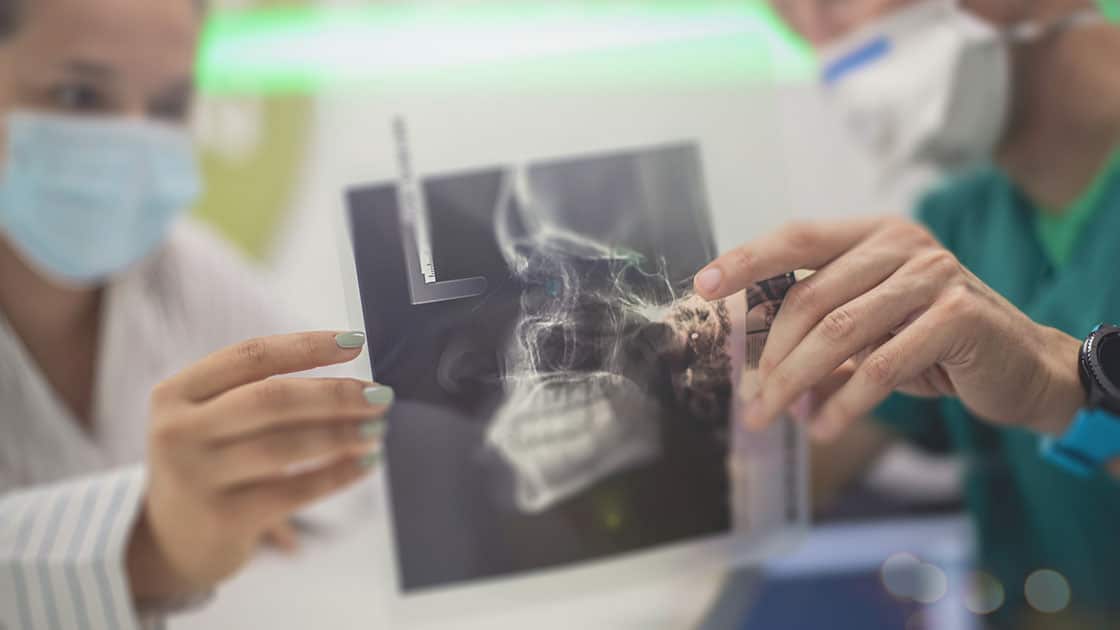
Corrective jaw surgery, also known as orthognathic surgery, is done to correct misalignments or other abnormalities in the upper and/or lower jaw. The surgery is performed to improve function and can specifically address problems with breathing, occlusion (bite) and chewing ability, difficulty chewing, and/or speaking that are due to poor jaw or tooth alignment. The surgery often dramatically affects appearance as well, supporting greater facial harmony, although this is usually not the primary reason the surgery is performed.
Our board-certified oral and maxillofacial surgeons bring advanced training and extensive experience to every procedure, ensuring patients receive the best surgical care in a comfortable experience. As specialists in oral and maxillofacial surgery, we have a deep understanding of the jaw, oral cavity, and surrounding structures — and we work closely with your orthodontist and dentist to deliver the best possible outcomes.
Orthognathic surgery can involve procedures such as an osteotomy (bone cutting), bone grafts, distraction osteogenesis (stretching of the bone), and orthodontic (braces) care. Orthognathic correction is conducted in stages, and the course of treatment can last from a few months to a year or more. The surgical procedure is typically performed under general anesthesia, and most patients can expect a recovery period of several weeks. We offer a range of anesthesia options and will discuss the approach that best supports your well-being during your consultation.
In order to perform the procedure successfully, the jaw bone(s) will be repositioned in accordance with the patient’s specific needs. Inconspicuous incisions are typically made inside the mouth in order to achieve the best aesthetic and functional results.
Corrective jaw surgery is an effective treatment option for patients experiencing chronic jaw pain, joint pain, bite problems, or other functional problems that cannot be resolved through orthodontics alone. At True North Oral Surgery & Implants, our oral and maxillofacial surgeons are committed to compassionate care and improving your oral health and quality of life.
Who Is a Candidate for Corrective Jaw Surgery?
Corrective jaw surgery may be recommended for patients dealing with a variety of symptoms and conditions that affect daily function and comfort. You may be a candidate if you experience:
Our board-certified oral and maxillofacial surgeons bring advanced training and extensive experience to every procedure, ensuring patients receive the best surgical care in a comfortable experience. As specialists in oral and maxillofacial surgery, we have a deep understanding of the jaw, oral cavity, and surrounding structures — and we work closely with your orthodontist and dentist to deliver the best possible outcomes.
Orthognathic surgery can involve procedures such as an osteotomy (bone cutting), bone grafts, distraction osteogenesis (stretching of the bone), and orthodontic (braces) care. Orthognathic correction is conducted in stages, and the course of treatment can last from a few months to a year or more. The surgical procedure is typically performed under general anesthesia, and most patients can expect a recovery period of several weeks. We offer a range of anesthesia options and will discuss the approach that best supports your well-being during your consultation.
In order to perform the procedure successfully, the jaw bone(s) will be repositioned in accordance with the patient’s specific needs. Inconspicuous incisions are typically made inside the mouth in order to achieve the best aesthetic and functional results.
Corrective jaw surgery is an effective treatment option for patients experiencing chronic jaw pain, joint pain, bite problems, or other functional problems that cannot be resolved through orthodontics alone. At True North Oral Surgery & Implants, our oral and maxillofacial surgeons are committed to compassionate care and improving your oral health and quality of life.
Who Is a Candidate for Corrective Jaw Surgery?
Corrective jaw surgery may be recommended for patients dealing with a variety of symptoms and conditions that affect daily function and comfort. You may be a candidate if you experience:
- Chronic jaw pain or joint pain that has not responded to other treatment
- Difficulty chewing, biting, or swallowing
- An open bite, underbite, or overbite that braces alone cannot correct
- Facial surgery needs related to trauma, birth defects, or congenital conditions
- Obstructive sleep apnea or chronic mouth breathing linked to jaw structure
- Speech problems caused by poor jaw or tooth alignment