
If you are missing one or more teeth, selecting the right replacement option is essential for protecting your oral health and restoring your confidence. While dental bridges have traditionally been used to fill gaps, dental implants are now widely recognized as the superior long term solution for many patients.
At True North Oral Surgery and Implants, we often guide patients through this important decision. Although both options can restore your smile and improve function, dental implants consistently offer greater durability, bone preservation, and protection for surrounding teeth. For patients who qualify, implants are often the better investment in long term oral health.
How Dental Implants Restore More Than Just Your Smile
Dental implants are designed to replace the entire tooth structure, including the root. A small titanium post is surgically placed into the jawbone, where it gradually fuses with the surrounding bone through a process called osseointegration. Once healed, a custom crown is attached to the implant, creating a natural looking and fully functional replacement tooth.
One of the most significant advantages of dental implants is their ability to preserve jawbone health. When a tooth is lost, the underlying bone begins to deteriorate because it no longer receives stimulation from the tooth root. Over time, this can lead to facial changes and additional dental complications. Because implants function like natural tooth roots, they stimulate the bone and help prevent this shrinkage.
In addition to preserving bone, implants stand independently. They do not rely on neighboring teeth for support, which allows patients to maintain the strength and integrity of their surrounding natural teeth.
Why Bridges Often Fall Short Compared to Implants
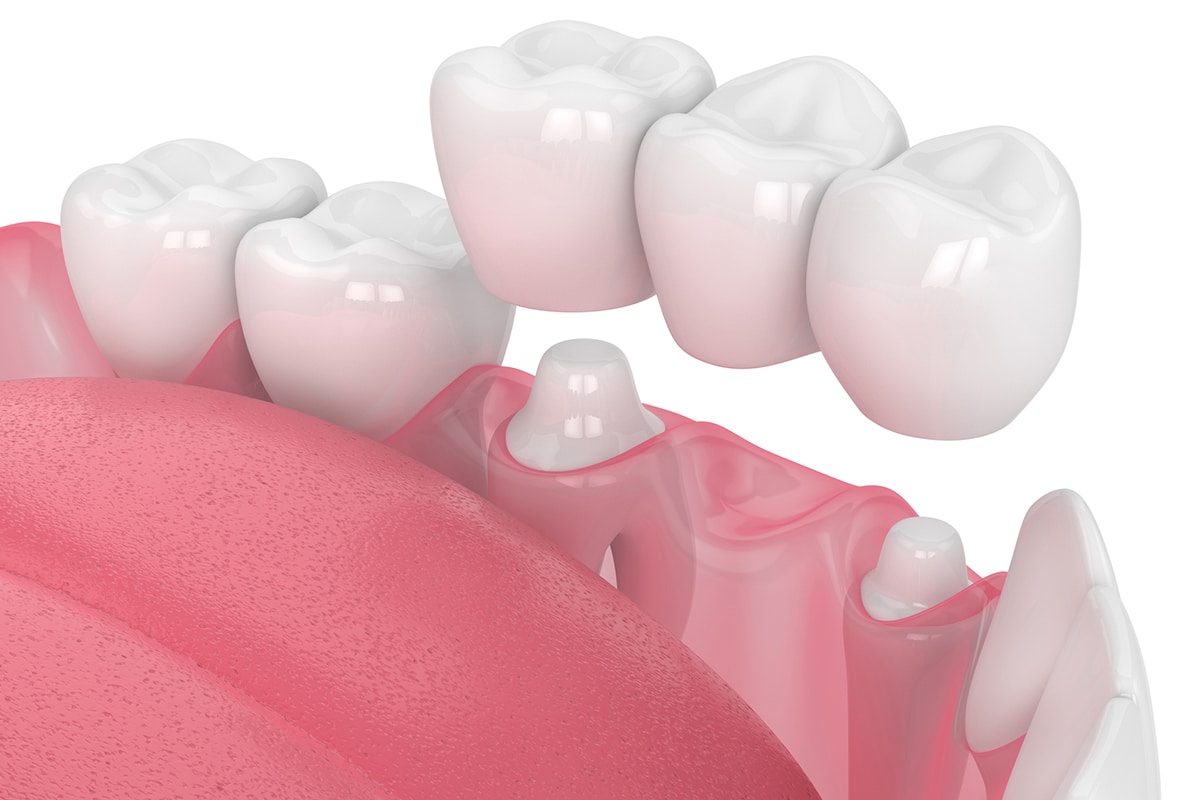
Dental bridges replace a missing tooth by anchoring a prosthetic tooth to the adjacent natural teeth. To secure the bridge, those neighboring teeth must be reshaped and fitted with crowns. While bridges can effectively restore appearance and chewing ability, they come with important limitations.
Unlike dental implants, bridges do not replace the tooth root. This means the jawbone beneath the missing tooth continues to shrink over time. Bone loss can eventually affect facial structure and may complicate future treatment options.
Another major drawback is the impact on healthy teeth. Preparing teeth for a bridge requires removing a significant amount of enamel, permanently altering otherwise healthy tooth structure. If one of the supporting teeth develops decay or fails, the entire bridge may need to be replaced.
While bridges may be appropriate in certain cases, particularly when adjacent teeth already require crowns, they do not provide the same level of structural support or long term protection as implants.
Long Term Benefits That Make Implants the Preferred Choice
When comparing dental implants and bridges, several key advantages consistently make implants the preferred option for eligible patients.
- Superior Longevity. Dental implants are built to last. With proper care and routine dental visits, they can last decades and often a lifetime. Bridges typically last 10 to 15 years before requiring replacement. Over time, implants often prove to be the more cost effective solution.
- Better Bone Preservation. Because implants stimulate the jawbone, they prevent the progressive bone loss that naturally follows tooth loss. Bridges do not offer this benefit, which can lead to gradual structural changes in the mouth.
- Protection of Natural Teeth. Implants do not require altering neighboring teeth. Preserving natural tooth structure is always a priority in modern dentistry, and implants allow patients to maintain the strength of adjacent teeth.
- Natural Look and Feel. Implants closely mimic natural teeth in both appearance and function. They allow patients to chew, speak, and smile with confidence, without worrying about movement or shifting.
- Simpler Daily Maintenance. Implants can be brushed and flossed just like natural teeth. Bridges often require specialized flossing tools to clean underneath the artificial tooth, making hygiene slightly more complex.
When Dental Implants Are the Ideal Solution
Most healthy adults with adequate jawbone density are candidates for dental implants. Even patients who have experienced some bone loss may qualify with the help of bone grafting procedures designed to rebuild support.
During a consultation at True North Oral Surgery and Implants, advanced imaging is used to evaluate bone structure and overall oral health. This thorough planning ensures implants are placed with precision and long term success in mind.
While implants do involve a surgical procedure and a healing period, the long term advantages often outweigh the temporary inconvenience. Patients who prioritize durability, stability, and preservation of their natural anatomy frequently find implants to be the most rewarding choice.
A Smarter Investment in Your Oral Health
Choosing how to replace a missing tooth is about more than filling a gap. It is about protecting your oral health for years to come. While bridges may offer a quicker or initially less expensive solution, they do not provide the same structural and biological benefits as dental implants.
Dental implants support the jawbone, protect surrounding teeth, and deliver unmatched longevity. For many patients, they represent the most advanced and reliable method of tooth replacement available today.
At True North Oral Surgery and Implants, every treatment plan is customized to fit your individual needs, health history, and long term goals. By carefully evaluating your options, you can move forward with confidence knowing you have chosen a solution designed for lasting comfort, function, and stability.
Frequently Asked Questions About Dental Implants
Are dental implants painful?
Most patients report minimal discomfort during and after the procedure. Local anesthesia and, when appropriate, sedation options help ensure comfort. Mild soreness is common for a few days and can typically be managed with over the counter medication.
How long do dental implants last?
With proper care and regular dental visits, dental implants can last decades and often a lifetime. Maintaining good oral hygiene and avoiding habits such as smoking can help protect your investment.
At True North Oral Surgery and Implants, we are committed to providing advanced surgical care in a comfortable and professional environment. We focus on precision, safety, and long term results to help our patients restore their smiles with confidence. Whether you are exploring implants or other oral surgery solutions, we are here to guide you every step of the way. Contact us today to learn more and schedule an appointment.